

 Published 30. April 2026
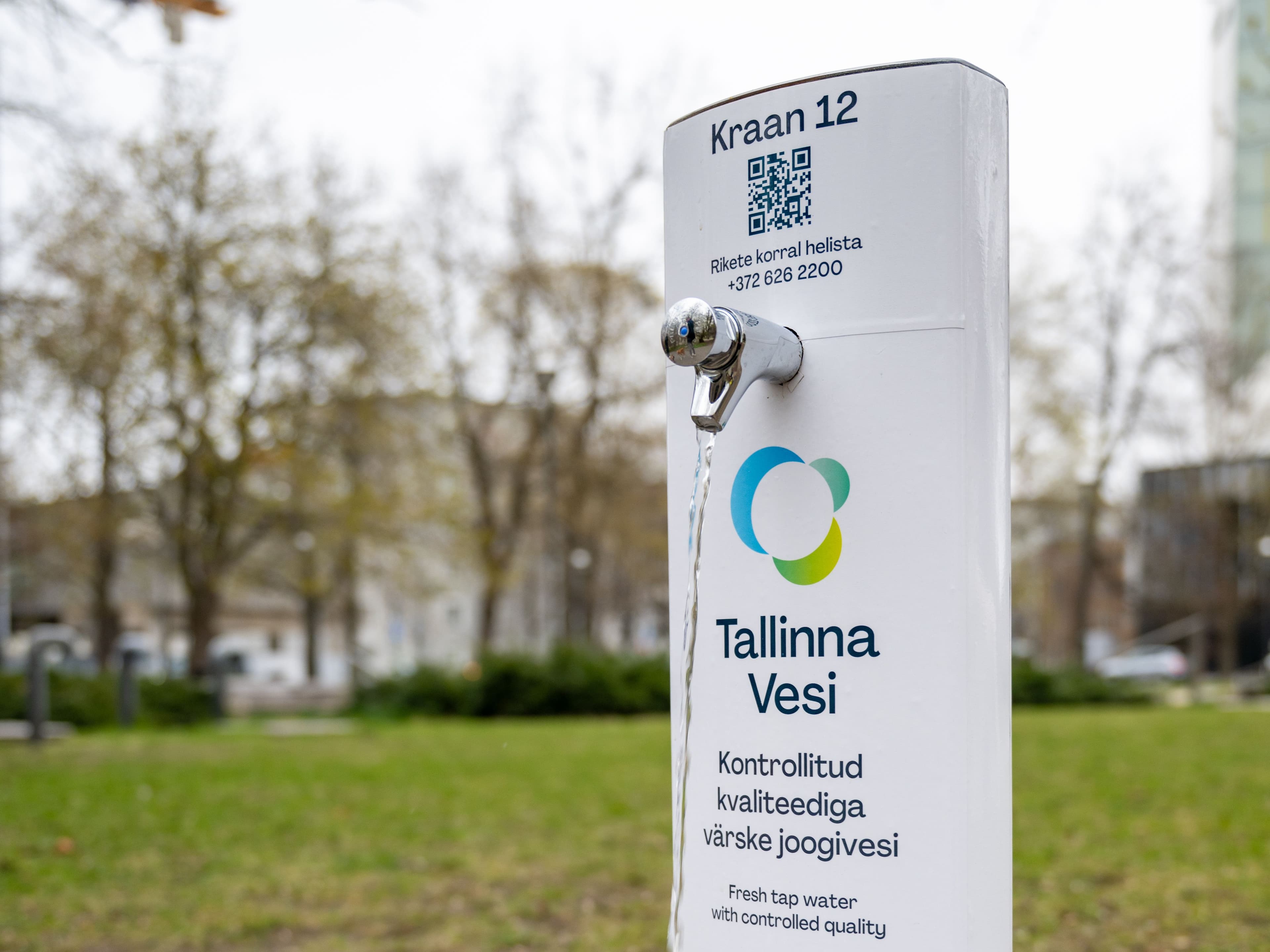
Tallinna Vesi opened 78 public drinking water taps in the capital, as well as in Saue and Maardu.
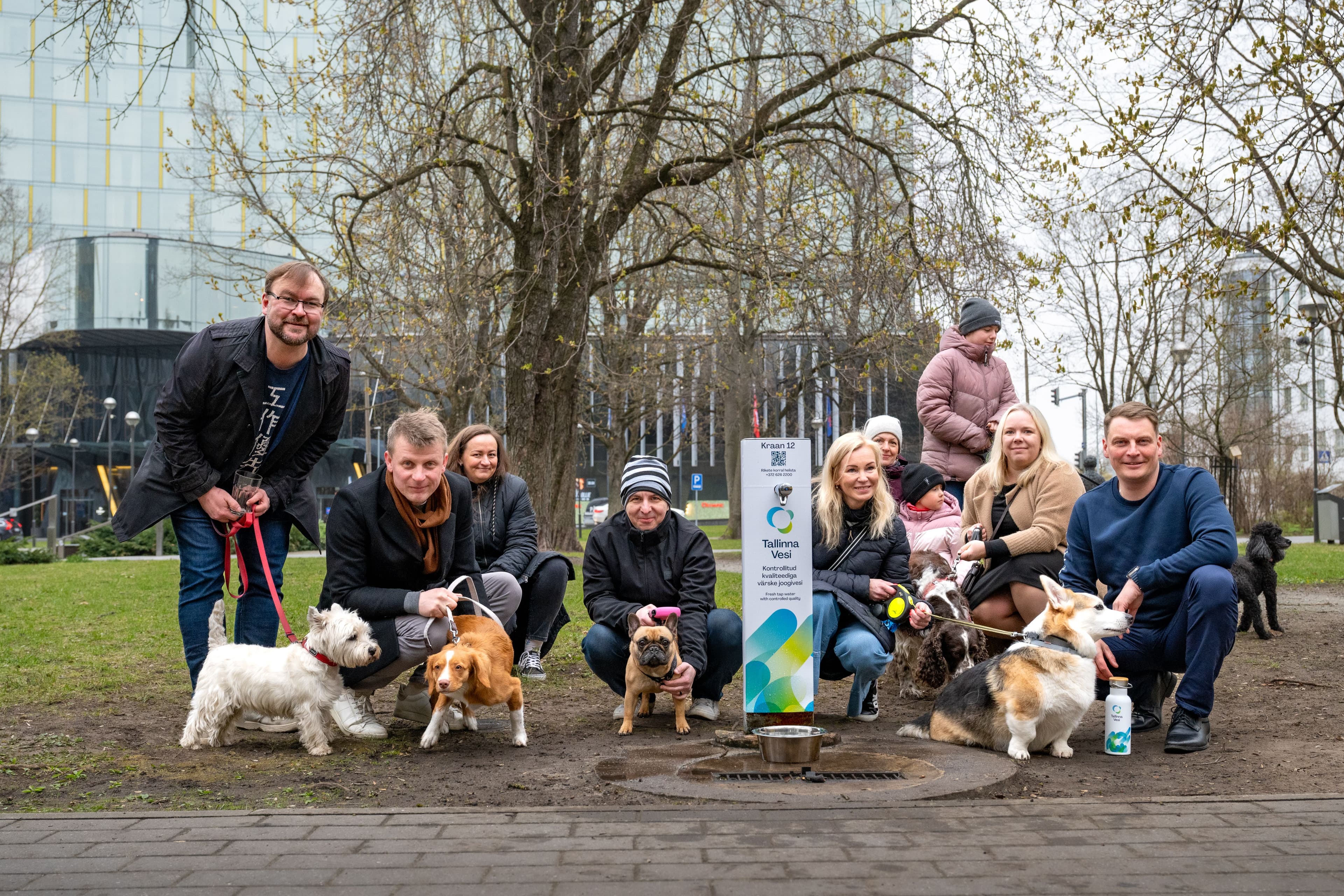
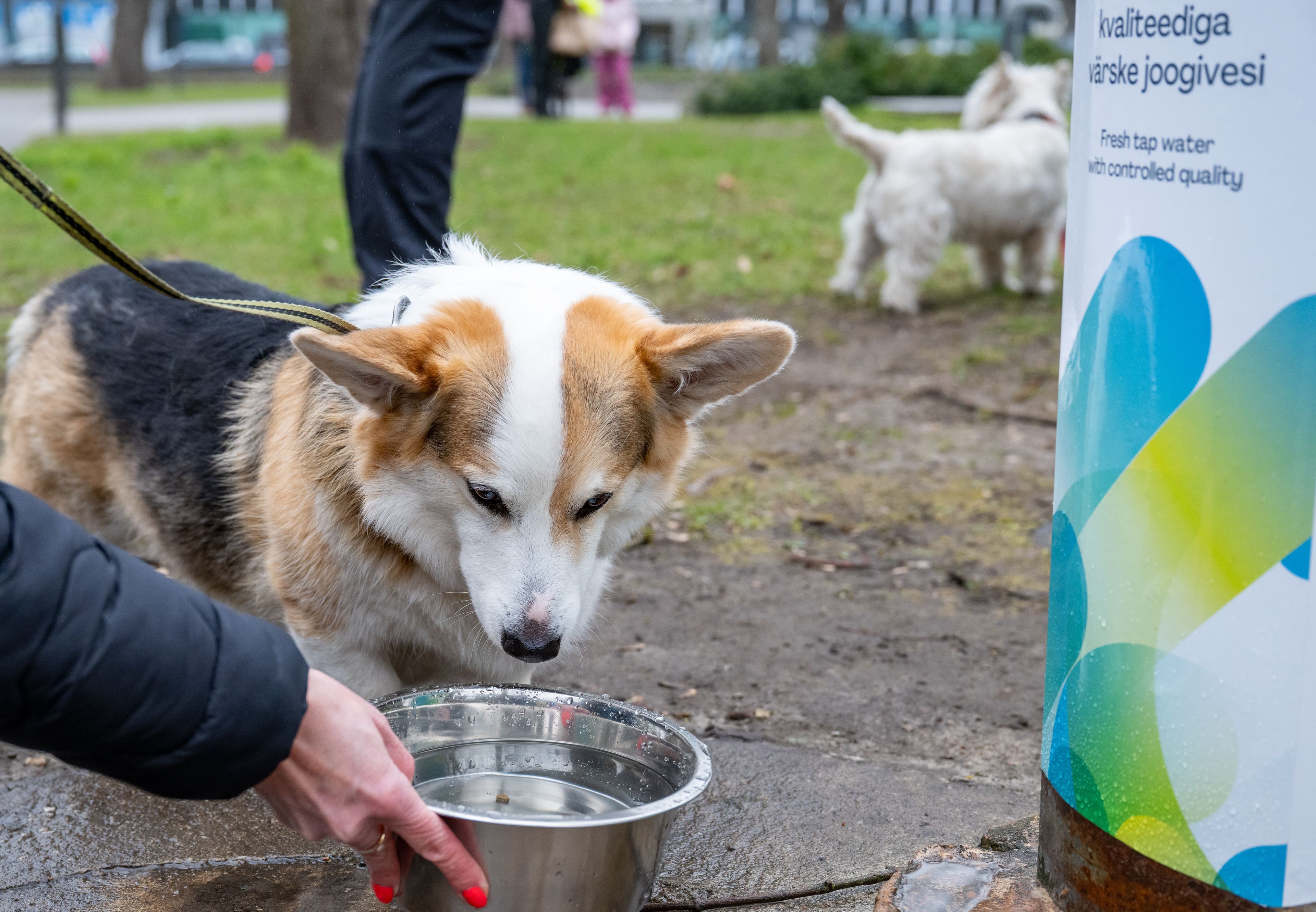
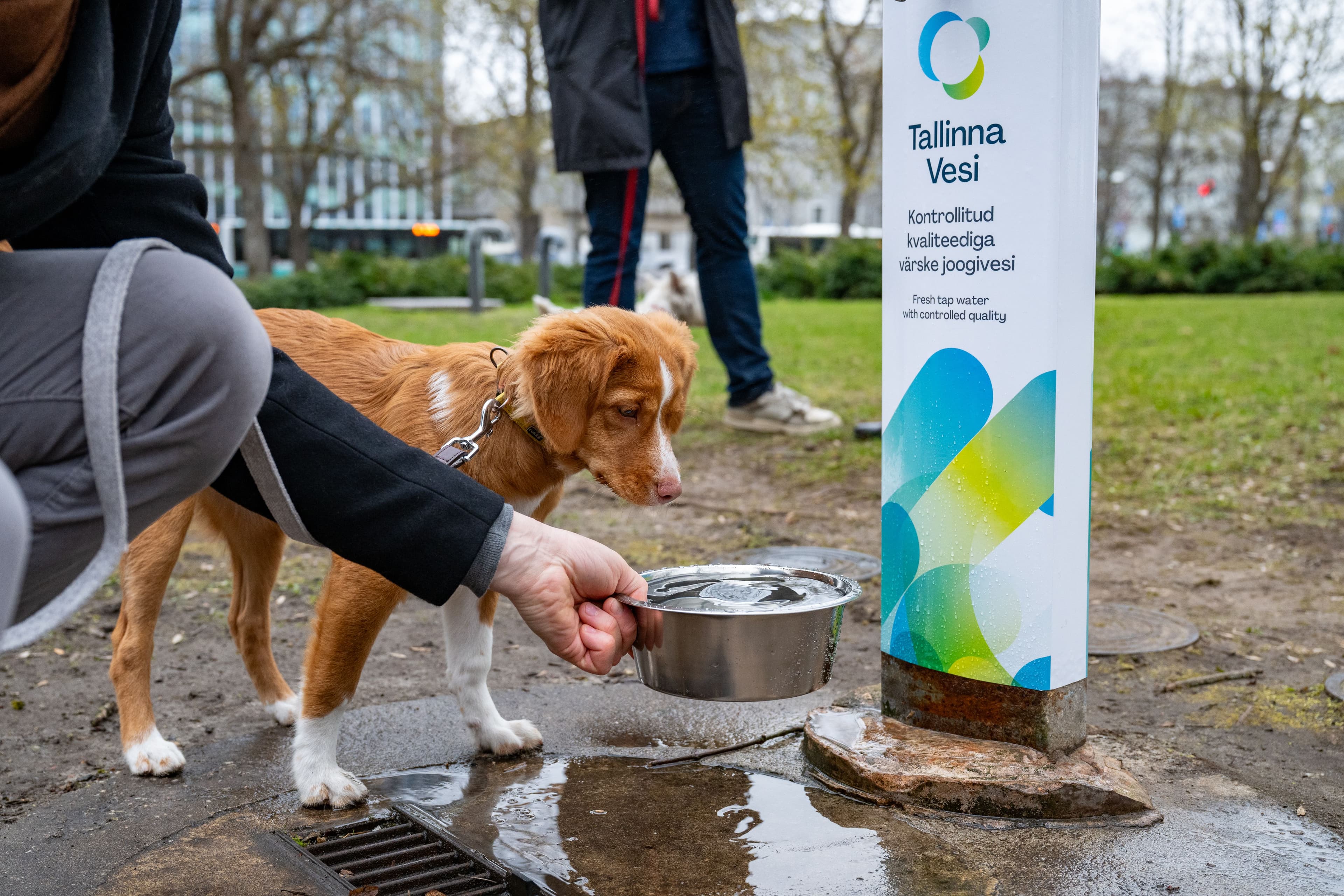
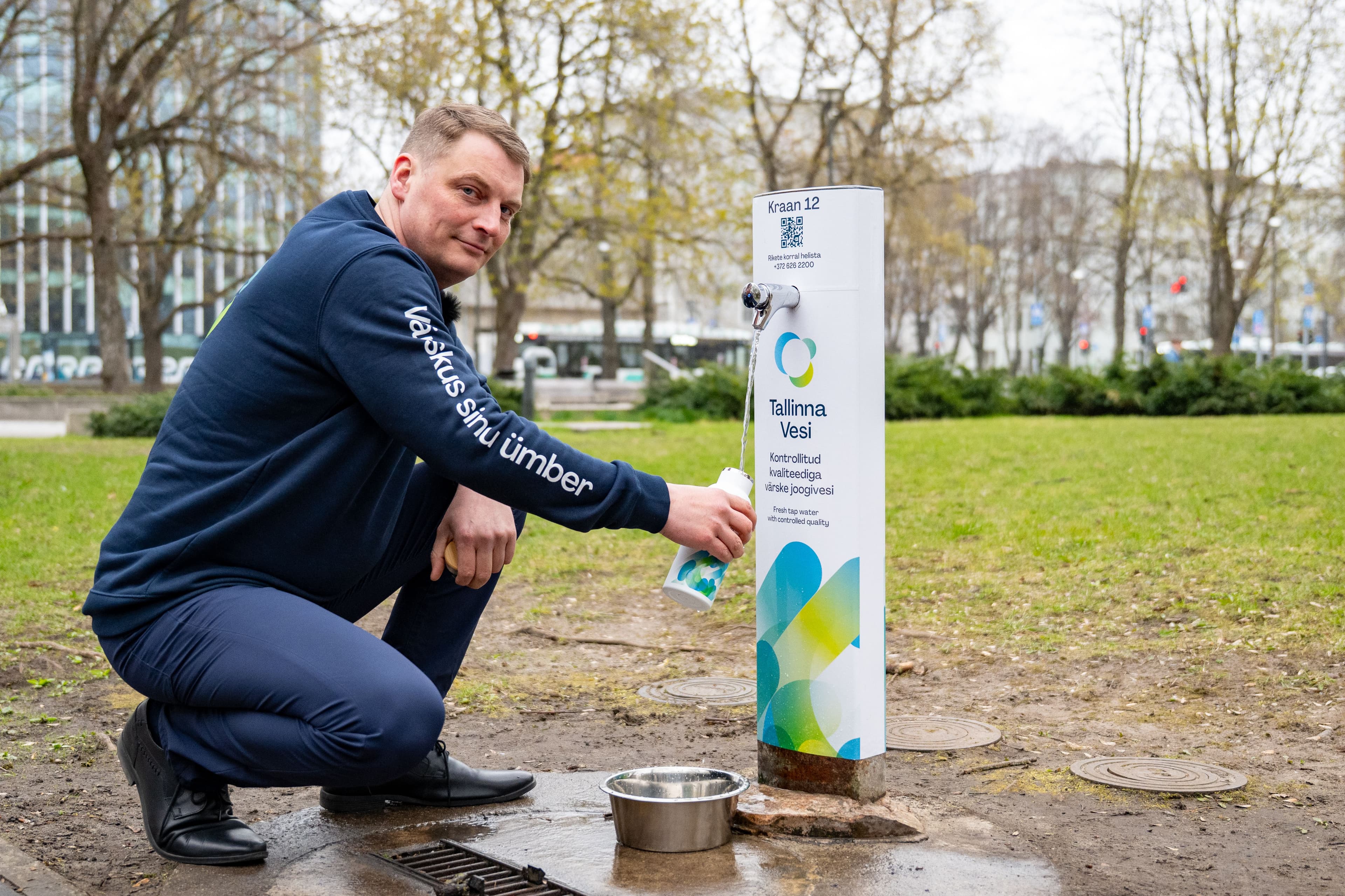
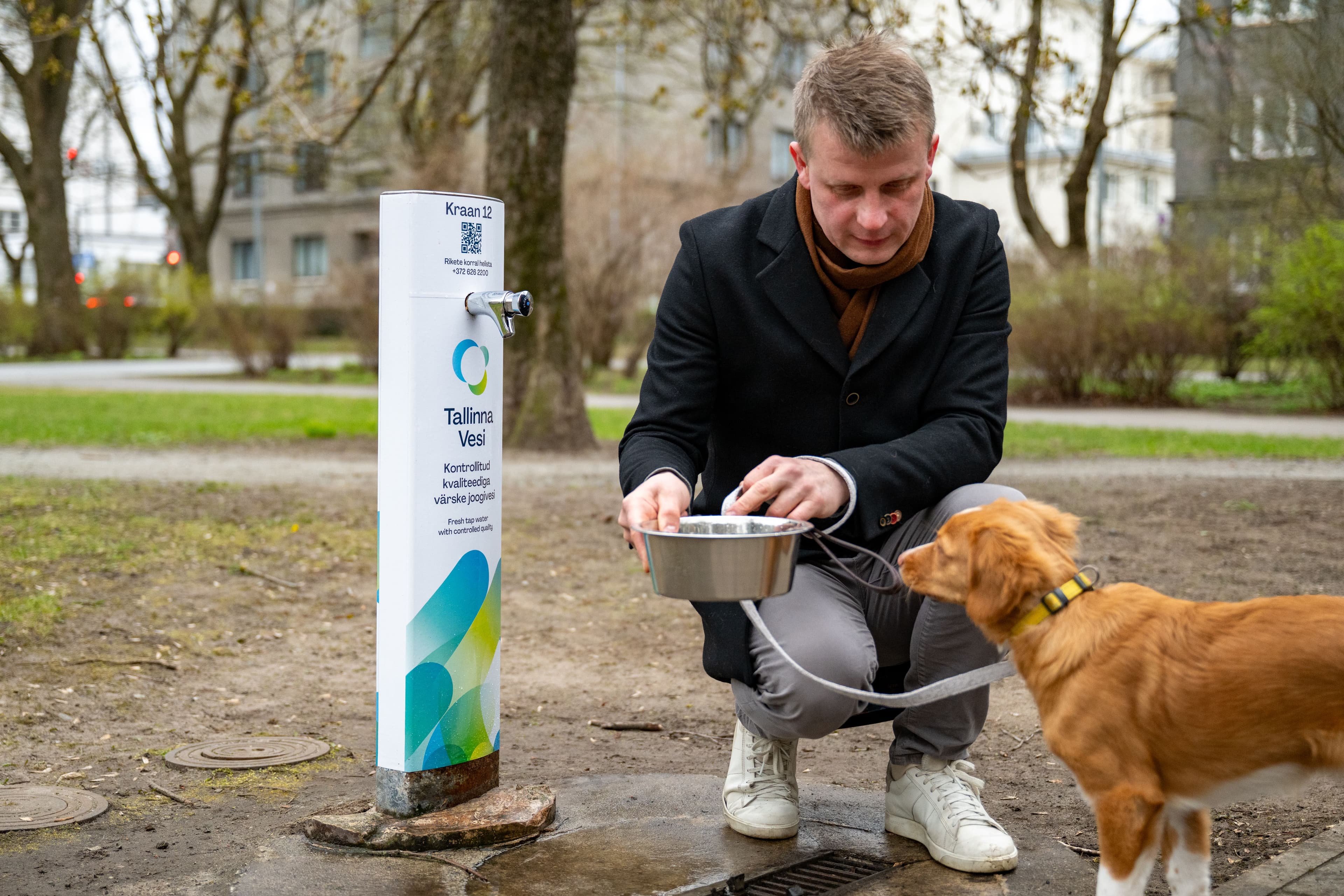
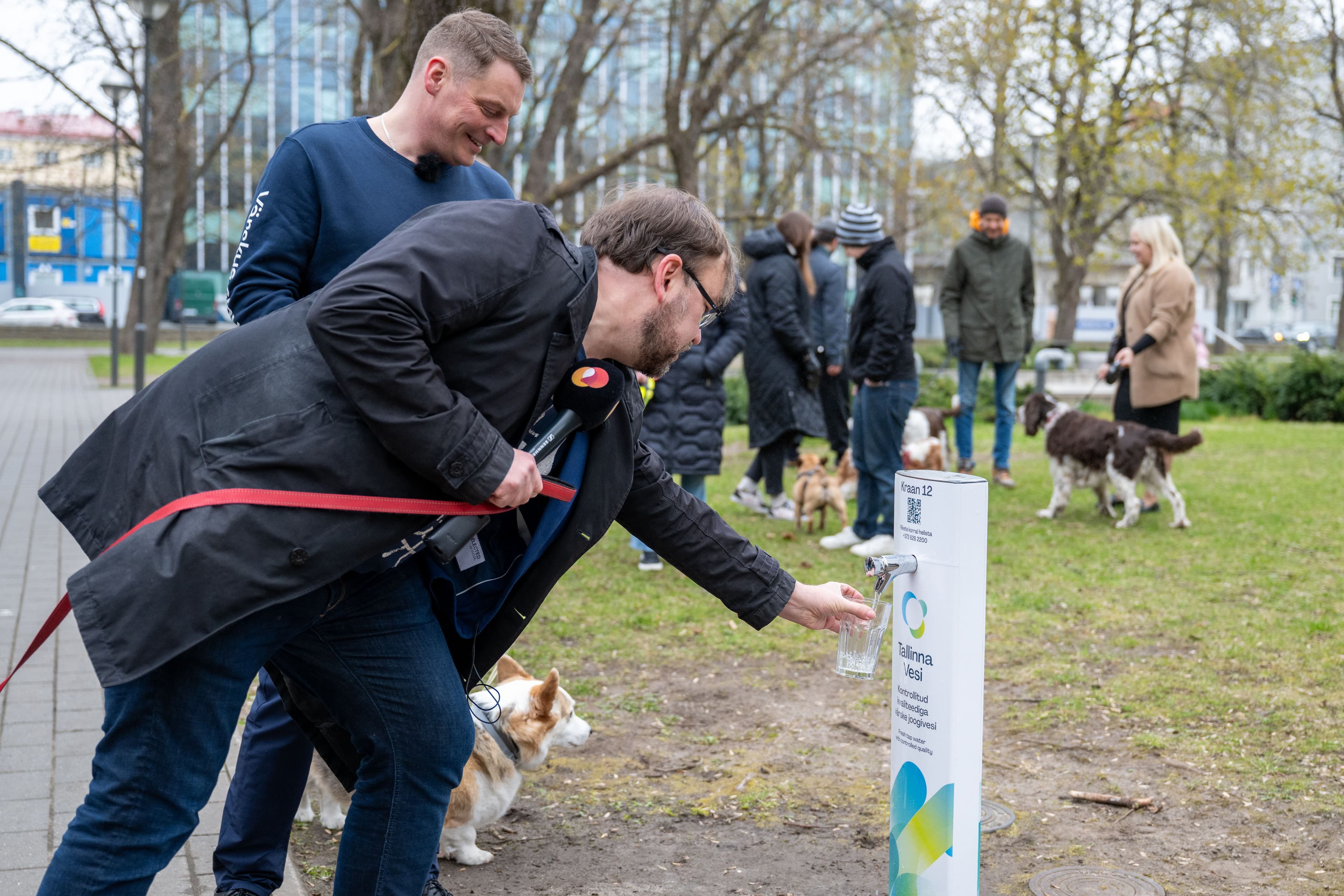
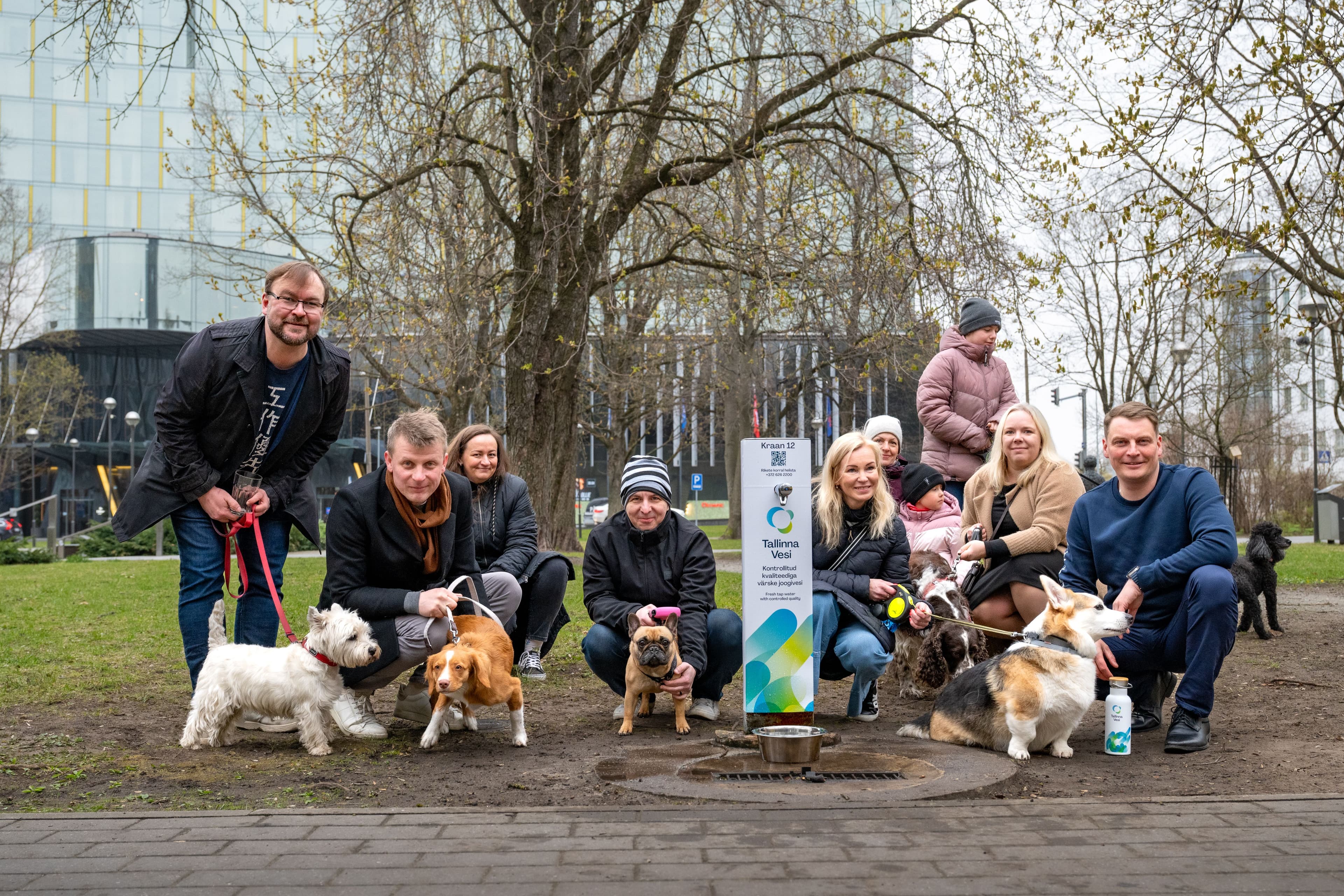
Today, 75 public drinking water taps were opened in Tallinn for the summer season, and for the first time, residents of Saue and Maardu also gained access to them. In cooperation with district administrations, Tallinna Vesi is gradually installing drinking bowls for pets next to the taps, and to mark the occasion, dogs were the guests of honor at the drinking water tap opening event.
- Community
- Drinking water
Published 30. April 2026
In addition to the taps that were already in use last year, Tallinna Vesi opened 18 new water points this year. Among Tallinn’s districts, the largest increase was in Mustamäe, where eight new public drinking water taps were opened. Four were installed in Põhja-Tallinn, two in the city center, and one new water point in Lasnamäe. For the first time, public drinking water taps were also built in Saue and Maardu.
“The expansion of the public drinking water tap network to locations where there is a need for taps is one of our long-term environmental projects,” said Aleksandr Timofejev, CEO of Tallinna Vesi. The new water points have been selected in cooperation with the city for locations with high foot traffic by residents and visitors, as well as near parks, playgrounds, and health trails.
In cooperation with district administrations, Tallinna Vesi is also planning to install drinking bowls for dogs next to the drinking water taps. “Pets also need water during longer walks, and owners no longer have to bring it from home,” Timofejev explained.
The positive environmental impact of public drinking water taps is significant. During last year’s Song and Dance Festival, nearly 120,000 liters of drinking water were consumed from public taps and water tanks at the festival grounds, preventing the production of more than 230,000 plastic bottles. According to Timofejev, the taps in the Old Town and the city center are also in active use, serving both local residents and tourists.
“At drinking water taps installed in the urban space, thirst can be quenched without buying bottled water. Carrying a reusable water bottle has become as common as carrying a mobile phone and helps reduce plastic waste,” Timofejev added.
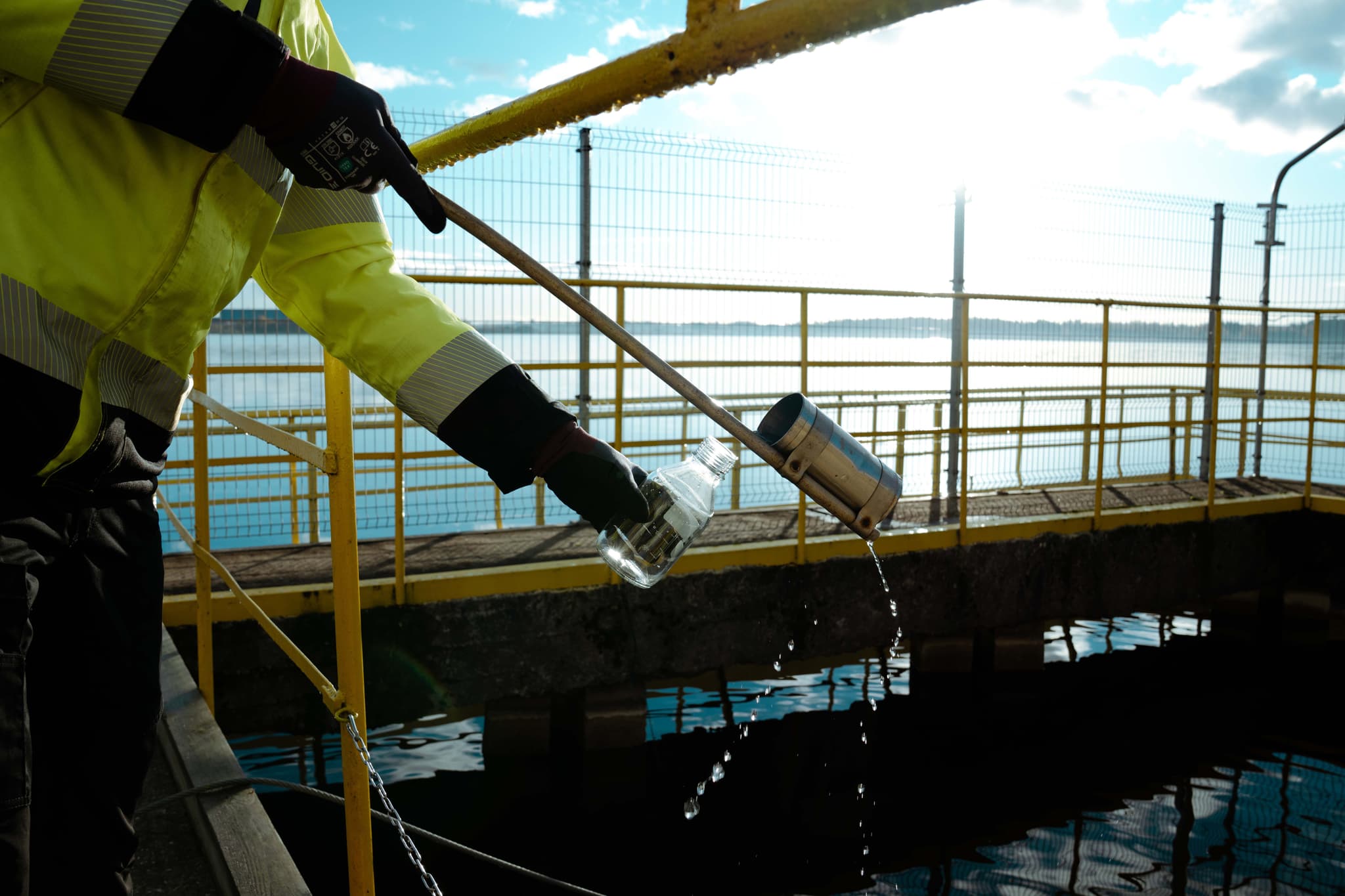
According to a study commissioned by Tallinna Vesi, 89% of residents trust tap water. Tap water contains natural minerals beneficial to the human body, including calcium and magnesium salts. Public water points are marked with the Tallinna Vesi logo, confirming that the water is controlled drinking water. Water quality is monitored continuously, and more than 3,000 water samples are taken annually.
All drinking water taps are marked with a QR code, which, when scanned, opens a map showing the locations of all water points. In addition, Tallinn’s taps are also listed on the online map Public Drinking Water Taps. The taps will remain open throughout the summer season.
The drinking water tap installation project originated under Tallinn’s participatory budgeting program and has since developed into one of the city’s largest environmental initiatives. The Saue public drinking water tap was financed by the Saue Municipal Government as part of the 2025 participatory budget.
AS Tallinna Vesi is Estonia’s largest water utility, serving nearly 25,000 residential and business customers and around 500,000 end consumers.
Photos: Raul Ollo