


Public water supply and sewer system
How does the public water supply and sewerage system work?
Our infrastructure works around the clock, unnoticed, to ensure that you always have clean drinking water in your home and that used water is safely taken away.
The public water supply and sewerage system, comprising pipes running under the streets of Tallinn and owned by Tallinna Vesi, is vital to the functioning of life in the city. We maintain our pipes in good condition and invest in rehabilitating them.
If your home or business is located in our service area, you can join the Tallinn Vesi’s public water supply and sewerage system. This will ensure you a reliable water supply, high-quality drinking water, and environmentally friendly wastewater treatment.
Service area
- We provide services in Tallinn, Maardu and the town of Saue.
- We bring high-quality drinking water to around 25,000 private and business customers every day, and provide convenient water and wastewater services to over 500,000 people – almost a third of the population of Estonia.
If you still haven't found the answer to your water problem, do get in touch with us!
Customer service
tvesi@tvesi.ee626 220024-hour emergency line
626 2400
Promises to our customers
We have administrative contracts in place with the municipalities in which we operate as a water undertaking. These administrative contracts establish clear expectations for us and commitments to our customers. This ensures that our service is reliable, transparent and considerate.
We ensure high-quality drinking water
We make sure your drinking water is always clean and safe. We will respond to any issues related to water quality or pressure no later than the next business day.
We look after the environment
- We will clear sewer blockages within 12 hours at the latest.
- We will respond to sewer floodings within 4 hours at the latest.
We respond quickly to enquiries
- We will respond to all requests for information within 2 business days.
- Every question concerning our services or activities will be answered, because we believe in open and clear communication.
We resolve complaints thoroughly
We will respond to any complaints indicating dissatisfaction with our activities or the quality of our services within 10 business days at the latest.
We will respond to any complaints about poor or excessive water pressure within a maximum of 30 days.
- Pressure problems that can be solved by maintenance work will be resolved within 14 days.
- Cases requiring design and construction work will be resolved within 18 months.
We are accurate and honest in billing
- If there is any doubt about the accuracy of the water meter, we will check it and notify you of our decision within 2 business days.
- If a bill is inaccurate, we will issue a corrected bill within 3 business days at the latest.
We keep to our agreements
- We will give you at least 5 days' notice of any planned interruption to water supply and its duration.
- In the event of planned outages, we will restore the water supply by the agreed time, or sooner.
- Water outages will never last longer than 24 hours, unless authorised by the local authority.
- If the outage lasts more than 5 hours, we will provide you with an alternative water source, such as a temporary connection or a water tank, that meets the required quality standards for drinking water.
- If we have arranged to meet, we will be there on time.
If a promise is not kept
Our word is our bond. If we fail to keep any of these promises, we will pay you 20 euros in compensation. The compensation will be automatically offset against your consumption bill, provided that you have a valid service contract and have met your obligations to Tallinna Vesi.
We keep it fresh with regular maintenance
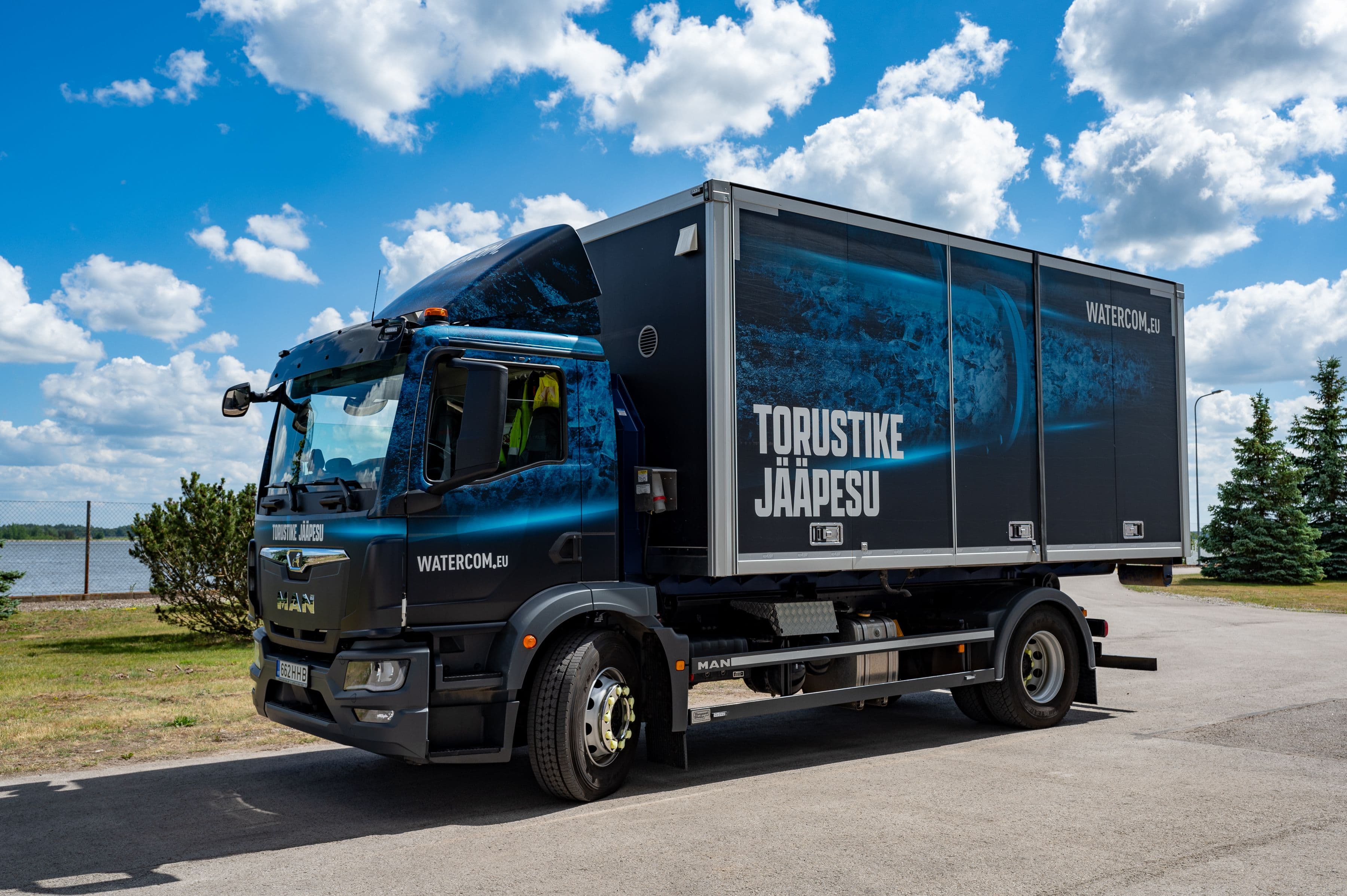
We constantly carry out preventive maintenance to keep our water and sewer pipes in good condition.
Ice pigging
Every year, we clean over 140 kilometres of water pipes using the ice pigging method. This environmentally friendly technology uses ice flakes made from a solution of water and table salt. These flakes travel through the pipes like tiny cleaning crystals, removing any limescale or sediment that has built up. The end result is a more reliable water supply to every home.
Reducing water leakage
Every drop counts. By preventing water leaks, we can save nature's resources and ensure that water is used sustainably. Our target is to keep water loss rate below 14%. We therefore monitor the network on a daily basis and react to leaks as soon as they occur. This way, we ensure that clean water gets to where it needs to go.
High-pressure jet washing
Through preventive high-pressure jet washing, we have significantly reduced the number of sewer blockages. A high-speed flow is used to flush all the accumulated sediment out of the pipes. This sediment is then collected and transported safely to the wastewater treatment plant at Paljassaare.
Pipeline rehabilitation and construction
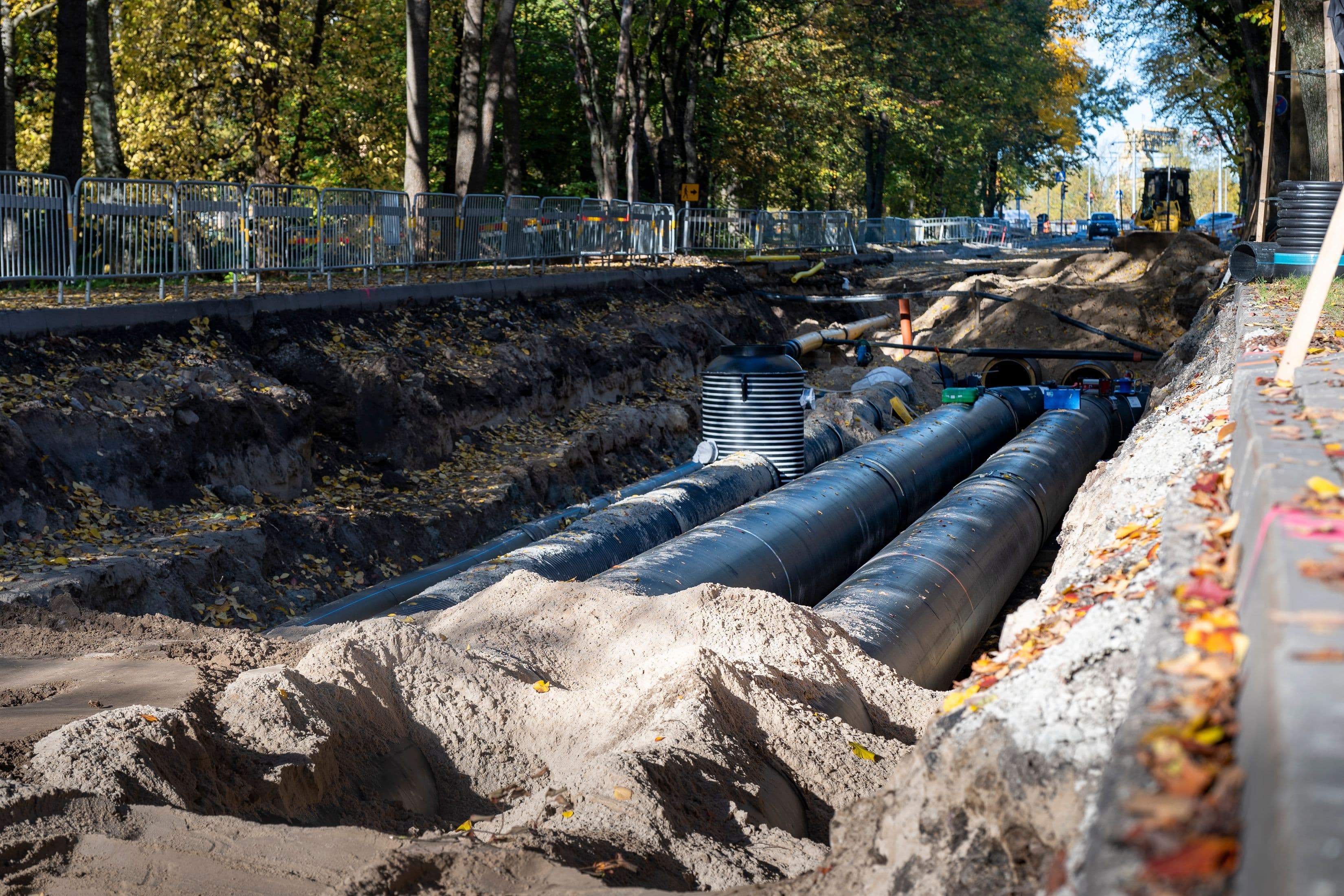
Tallinn and its surrounding municipalities have around 3,000 kilometres of pipes that take clean drinking water to consumers and carry dirty water to the wastewater treatment plant.
Every year, around 45 kilometres of pipes are rehabilitated and constructed as needed.
When carrying out construction work, we work together with other utility owners and the City of Tallinn to minimise disruption to residents' daily lives and create a modern urban space.
Why do we rehabilitate pipes?
- The average lifespan of pipes is 50 years, so rehabilitation is essential in order to prevent water incidents and ensure a high-quality water supply.
- We are adapting to climate change by improving our stormwater drainage systems to cope with more intense rainfall.
- Separating the sewer and stormwater systems will help to reduce the risk of flooding and ease the load on the treatment plant. It means that stormwater and wastewater are carried in separate pipes.
What is a no-dig method?
No-dig methods are a modern and environmentally friendly way to reconstruct and build pipes. These methods cause minimal disruption to traffic because they require less excavation and the pipes are installed using drilling techniques.
Why are we developing stormwater systems?
We are developing stormwater systems in order to mitigate the risk of flooding caused by climate change and to ensure a high-quality water supply in urban areas.
In Tallinn, both combined and separate sewer systems are used to drain stormwater.
- The combined sewer system carries both wastewater and stormwater to the treatment plant, where it is thoroughly treated before being released into the sea.
- The separate storm sewer system releases stormwater directly into the receiving water, typically without any treatment.
Read more about stormwater here.
So that fresh water could reach your tap
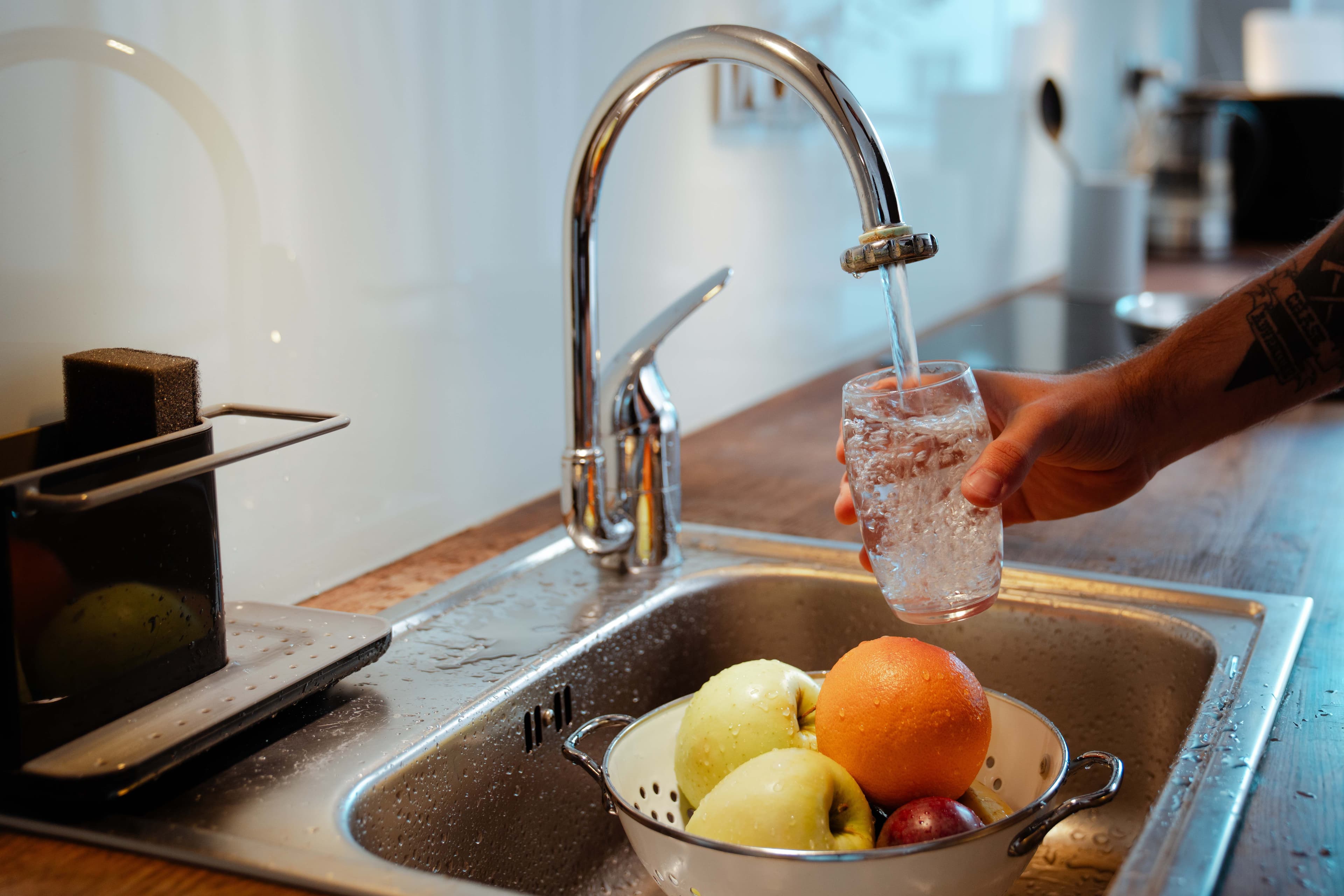
We keep a constant eye on the quality of the water that comes out of your tap to ensure it is safe and of high quality. Drinking water affects the health and well-being of us all, and this is why we leave nothing to chance.
We monitor the water's journey from the treatment plant and pumping stations to your tap. By maintaining the pipes and taking regular samples, we ensure that the water stays clean and fresh. All operations are carried out in accordance with monitoring programs approved by the Health Board. Each house and property owner also has an important role to play in ensuring that water remains clean as it flows through their property's pipes.
Samples from across the city
There are around 120 sampling points in Tallinn and Harju County. These include kindergartens, schools, homes, and businesses, all scattered throughout the service area to ensure a complete overview of water quality in every district of the city. We take more than 3,000 water samples from our customers' taps every year.
All water test results are public and can be found on the Health Board's information system (EST). Results for drinking water leaving the treatment plant are also available here (EST).
Maintaining the quality of drinking water
We use small amounts of chlorine to ensure the microbiological quality of drinking water produced from surface water. This keeps the water safe throughout its journey. You may sometimes notice a more distinct smell or taste of chlorine. This simply means that the water is clean and of a high quality.

