


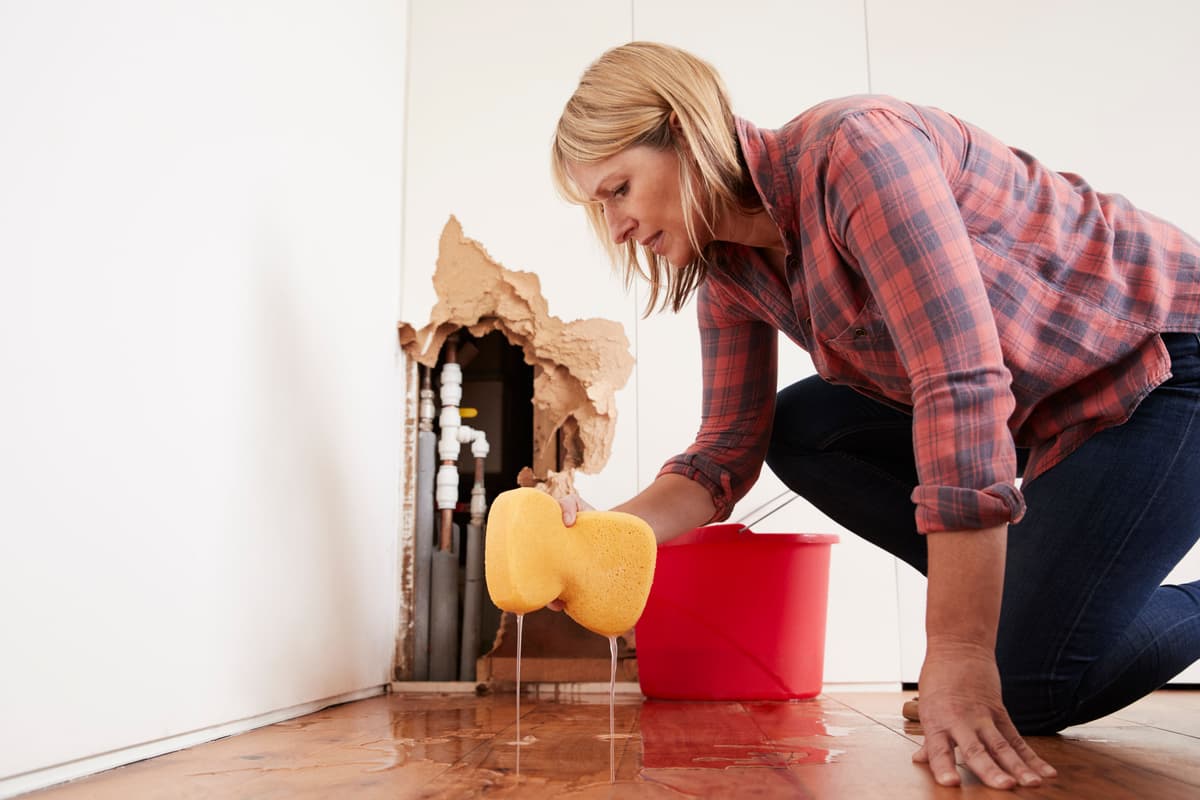
Water and sewer systems on property
Where does the responsibility of the property owner begin?
We work around the clock to ensure that our infrastructure is maintained in good condition, guaranteeing good life in towns and municipalities. As a property owner, you're part of that too.
The water and sewer systems on the property, that is, the place of consumption, include all water pipes and sewers as well as the water meter located on your property and inside your building.
We maintain and repair the pipes located under the streets within our service area up to the connection point. From that point onwards, responsibility for the water and sewer systems lies with the property owner. We have signed a service contract with each property owner that specifies the scope of their responsibilities.
At the water metering unit, we are only responsible for the water meter, and the rest is the responsibility of the property owner.
What is a connection point?
Connecting is necessary if the property has not been connected to water and/or sewerage, or if the property owner wants to reconstruct their existing connections.
A connection point is the point where the pipes of Tallinna Vesi are connected to the water and sewer systems of the property. This is a technical and legal boundary that determines who is responsible for maintaining the pipes.
- From the connection point to the consumer (e.g. to the building), the property owner is responsible for the pipes.
- Outside the connection point (i.e. in the public space), the responsibility is ours.
- The exact location of the connection point is specified on the boundary drawing, annexed to the service contract.
Construction or rehabilitation of pipes on property
- The construction or reconstruction of water pipes and sewers on the property begins with an application for technical specifications. This is followed by the preparation of a design based on these specifications.
- The specific steps depend on the scale of the construction work and whether it also involves the construction of a connection point.
- The construction work must be carried out in line with our technical requirements.
- For the construction of pipes on the property, you can contact one of our partners.
Collection and drainage of stormwater
Property owners can contribute to reducing the load on the city's stormwater systems by creating solutions for collecting stormwater on their property.
Planning to construct a stormwater drainage system on your property? Start by applying for technical specifications.
Water and sewerage services
To get drinking water to you and have wastewater taken away, the property owner needs to sign a service contract.
A permanent service contract is signed with the property owners, person(s) entered as possessor(s) in the land register, or the apartment association.
If you don't have access to the public sewerage system, you can apply for an organised sewage discharge service.
Most common problems with water and sewerage
Water quality has changed
Tap water may become discoloured or cloudy following construction or maintenance work on the pipes. This is because sediment is washed off the pipe walls when the water pressure and flow rate change.
- Open the tap and let the water run until it is evenly clear to remove the turbidity.
- Close the main stop valve inside your building when pipes in the area are being cleaned with ice pigging to prevent sediment from entering the property's pipes and subsequently disrupting the water supply.
If you are worried because the water is still cloudy, you should check the water metering unit first.
- Make sure that the filters are clean and that the sediment trap is not blocked.
- If the problem is in an apartment building, establish whether it is affecting the whole building or just one apartment. If the latter is the case, the problem is presumably within the property and can be resolved without our intervention.
If you haven’t used the water for a long time, let it run for a while. Changes in water quality, such as changes to the taste, smell, clarity or microbiological characteristics of the water, may occur in stagnant water. Maintaining regular water movement helps to improve water quality.
- We recommend opening taps that have not been used for a while and letting the water run until it is fresh.
- Hot water boilers that have not been used for a long time should also be emptied and, if necessary, cleaned.
Remember that poorly maintained old pipes can affect water quality. Make sure to check the water metering unit on your property. If it is fitted with filters, these should be regularly maintained and replaced if necessary.
No water in tap
First, check that this is not a planned water outage. Check our service updates map here.
- We will notify the customer at least five days in advance of any planned interruption to the water supply and its duration.
If there are no planned outages in your area, the reason for the lack of water supply may be a water incident.
- Making the repair when the water incident has occurred on pipes inside the house is the responsibility of the property owner.
- If the incident is on our pipe, we will make the repair as quickly as possible, but no later than within 12 hours.
- Please notify us of this by calling the emergency line on 626 2400. Before calling, check whether your neighbours are also experiencing the same problem, or notify your apartment association of this.
Low water pressure
If the water pressure is low, first check the water filter or sediment trap in the building's water metering unit, if these have been installed. If they are not cleaned regularly by the property manager, dirt will build up in them and block the water flow.
If the pressure is still weak after cleaning, please notify us know by calling on 626 2200.
Problems with slow-running wastewater drains
- Problems with slow-running wastewater drains are often related to the sewer pipes on the property.
- We recommend high-pressure jet washing every 3–5 years to prevent blockages.
- Problems can also be avoided by not throwing things into sewer that don’t belong there, such as insoluble paper towels, sanitary napkins, cotton buds, etc.
- Fatty food or coffee grounds also cause problems. While this may not cause an immediate blockage, grease will accumulate and build up on the pipe bends and walls over time, eventually forming an impenetrable clog.
Click here to find out what you should never flush down the toilet.
Maintaining the pipes
We constantly maintain the pipes in our service area and take over 3,000 water samples a year to make sure the water is clean. Pipes on the property also need attention and maintenance to prevent unexpected water outages and changes in water quality.
Over time, biofilm and sediments can build up on the pipe walls, and to get rid of this, the pipes need maintenance. This can be done using various technologies, such as air-scouring and ice pigging.
Since 2023, we have mainly used ice pigging technology to maintain our water networks. We clean around 165 kilometres of water pipes each year with ice pigging.
What can the property owner or water consumer do?
Flush by letting the water run
If you haven’t used the water for a long time, let it run for a while.
Changes in water quality, such as changes to the taste, smell, clarity or microbiological characteristics of the water, may occur in stagnant water. Maintaining regular water movement helps to improve water quality.
Install a non-return valve
Problems with sewers can be seen in rooms that are below ground level. The most common mistake is installing a non-return valve on the drain that receives water from the entire building. This will prevent water flowing in from the local main in the event of a blockage. However, water from the upper floors will still flood, causing inconvenience.
It is therefore the responsibility of the property owner to install a non-return valve to protect the sewer system below ground level, or the wastewater will have to be pumped over.
- A non-return valve is not required only in cases where the property's sewer drains are above the headwater level.
- The non-return valve must also be maintained following the manufacturer's instructions.
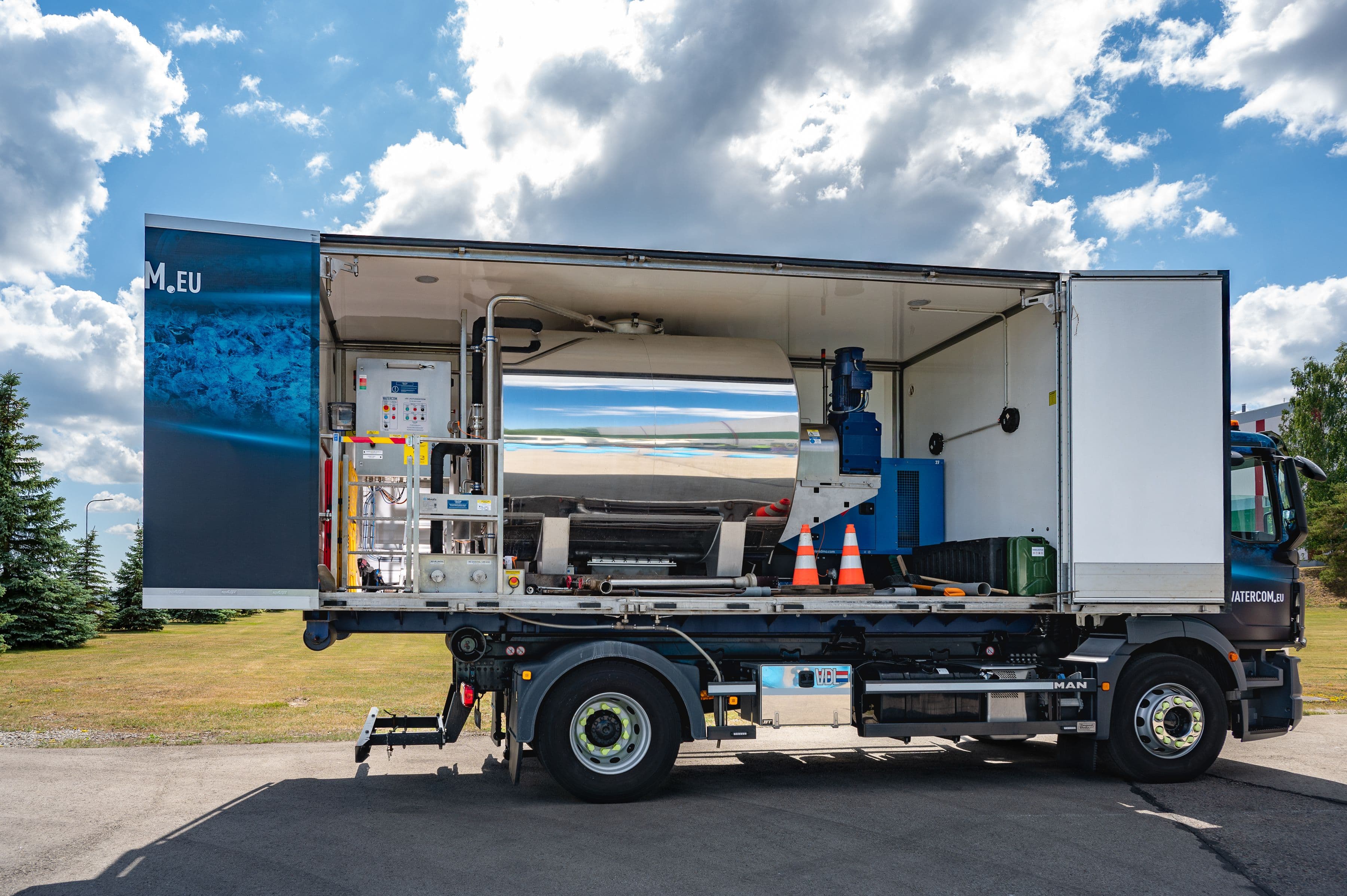
Water meter and water metering unit
We started installing remotely readable water meters in apartment buildings and private houses and for business customers at the end of 2022, and all customers in our service area should have smart meters by the end of 2026 at the latest.
In apartment buildings, smart water meters are only installed in the building's water metering unit.
For the smart meter installation to go smoothly, the water metering unit must comply with the requirements.
The most common mistakes made with water metering units
To get a water meter or have it replaced, homeowners should first check that their water metering unit meets the requirements. Having a water metering unit that is maintained in good condition also helps reduce the likelihood of water incidents.
- Most often, water metering units lack a console or bracket fixed to the wall.
- Pipes must be fixed rigidly to the wall or floor, and all taps must be in good working condition.
- It is important to make sure that there are no branches between the connection point to the public water supply system and the water metering unit – for example, water filters should only be installed downstream of the water meter, towards the pipework inside the building.
The work to reconstruct the water metering unit must be ordered from a plumbing company.
If the water metering unit requires major repairs and the water needs to be turned off, this must be booked at least two working days in advance by calling our information line on 626 2200. Once the work is finished, please e-mail a photo of the reconstructed water metering unit at tvesi@tvesi.ee.
In conclusion
Water and sewer systems on the property include the pipes, starting from the connection point, and the related equipment, located within your property, connecting your building to the public water supply and sewerage system. This system allows you to use tap water and transport wastewater away. Within the property, it is the responsibility of the homeowner to make sure that the pipes are maintained and kept in good condition.

