

 Published 10. September 2026
Tallinna Vesi opened the capital's first coastal stormwater sedimentation pond
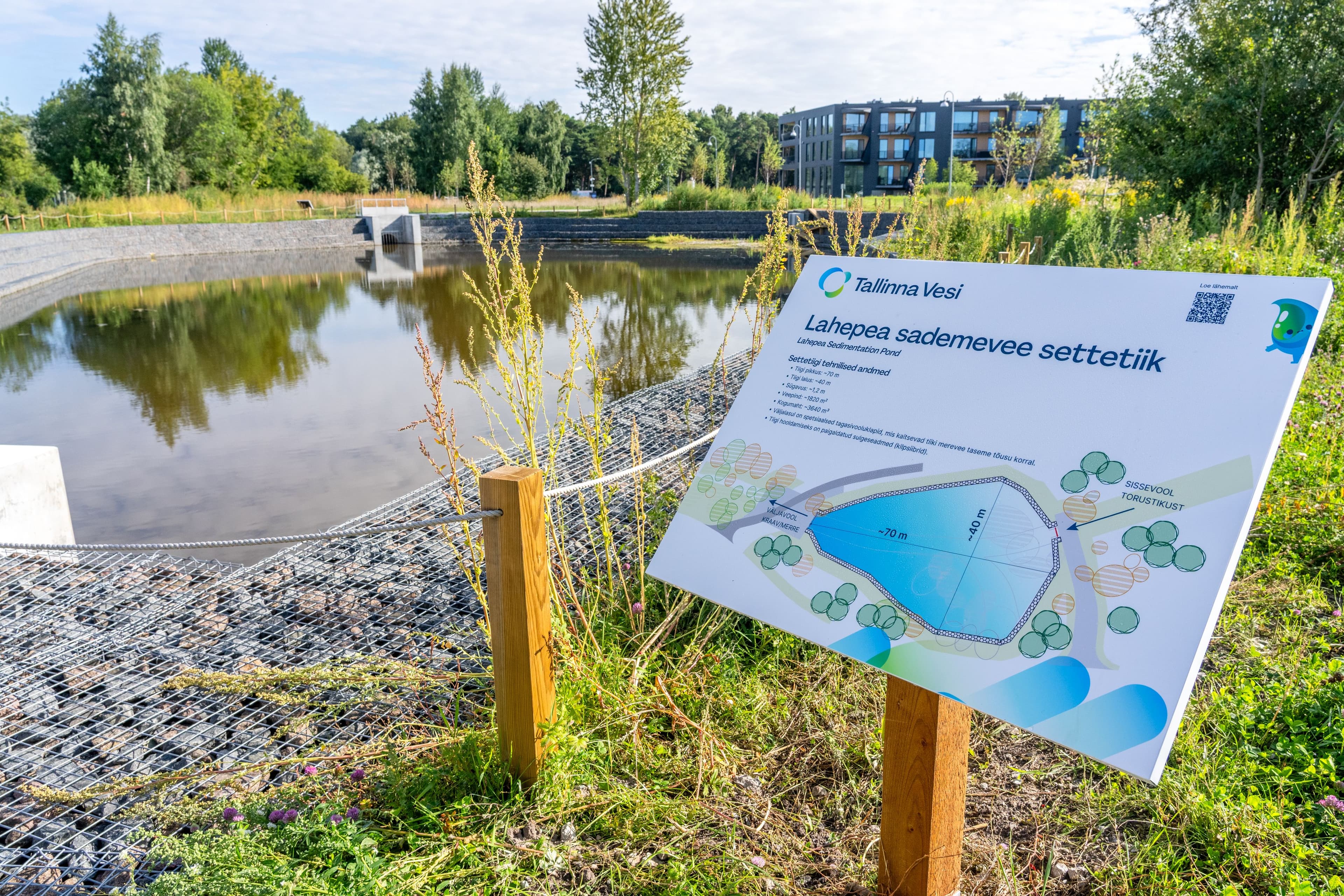
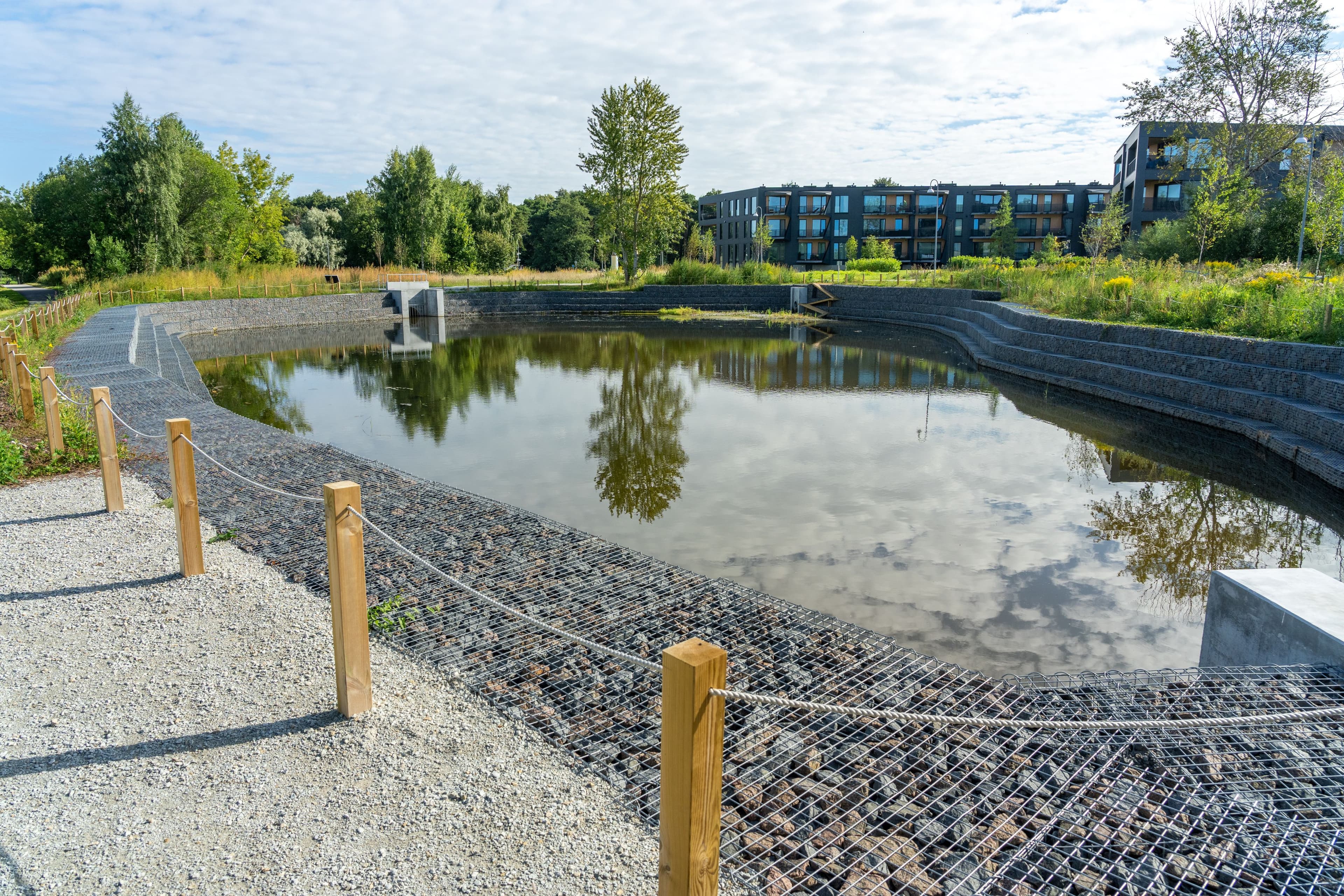
Built in the Lahepea Street area of North Tallinn, the capital's first coastal stormwater sedimentation pond helps to reduce the risk of flooding in the surrounding area and treats rainwater before releasing it into the sea, thus helping to keep the Baltic Sea clean.
- Environment
Published 10. September 2026
Marti Vaksmann, Head of Water and Wastewater Assets Development at Tallinna Vesi, says that studies and measurements show the intensity of rainfall in Estonia has increased by 4% over the past decade, and will likely continue to increase. This has created a need to seek new solutions to mitigate flooding in urban areas.
He believes that combined solutions are the most effective way of preventing flooding. “It's not possible to drain rainwater quickly and effectively enough during heavy rainfall using only pipes or green solutions,” explained Vaksmann. “Therefore, in Tallinn, we are using a combination of stormwater solutions, where nature-based solutions work alongside pipes. One of these solutions is the sedimentation pond that has been built."
“The existing sewer system in North Tallinn needs to be adapted to cope with the effects of climate change and the rapid development of the urban area. The sedimentation pond, together with the rehabilitated pipes, provide long-term protection for homes and infrastructure in North Tallinn," added Vaksmann. The area around Stroomi beach has been identified as a flood-risk zone, and the beach itself is a popular bathing spot.
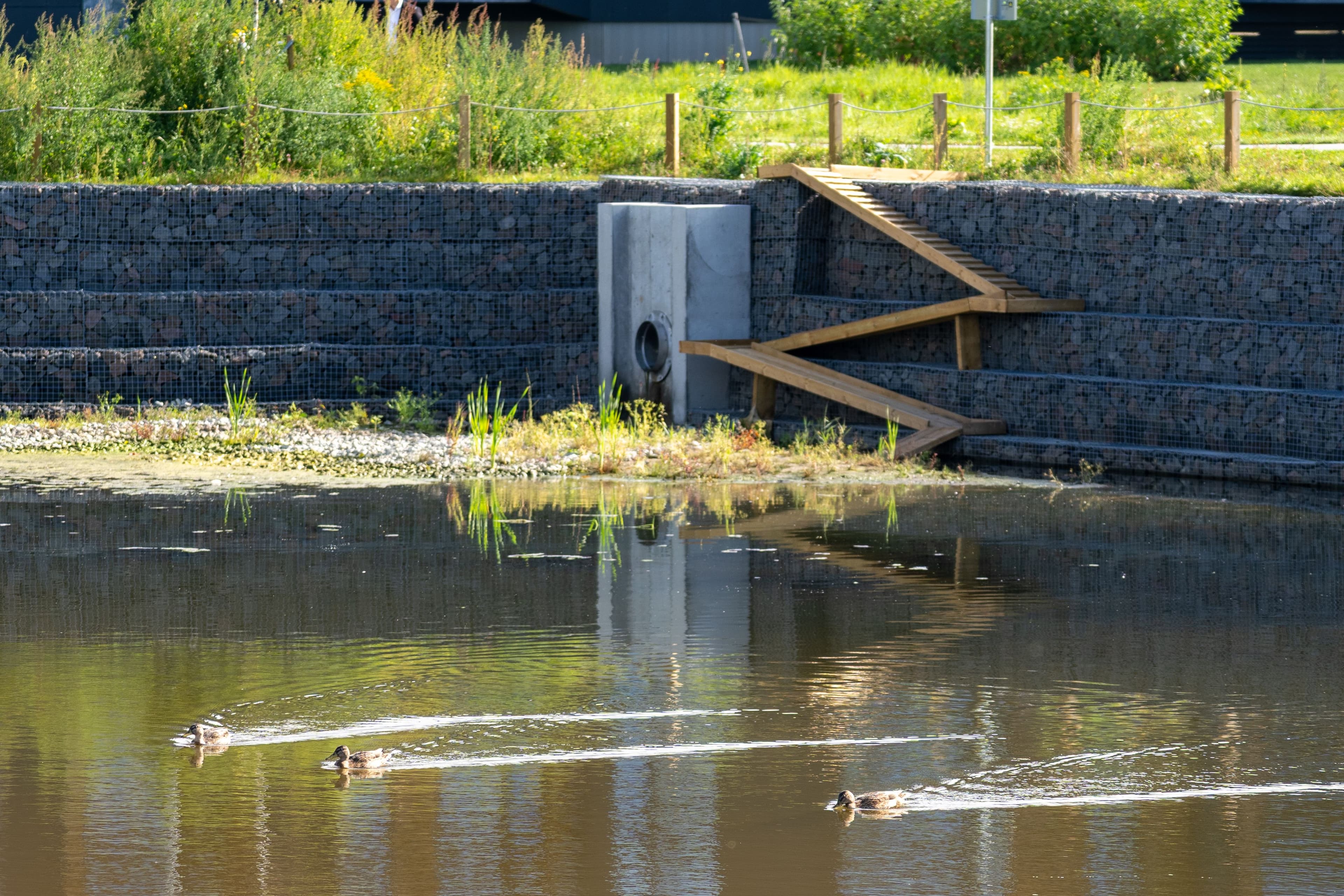
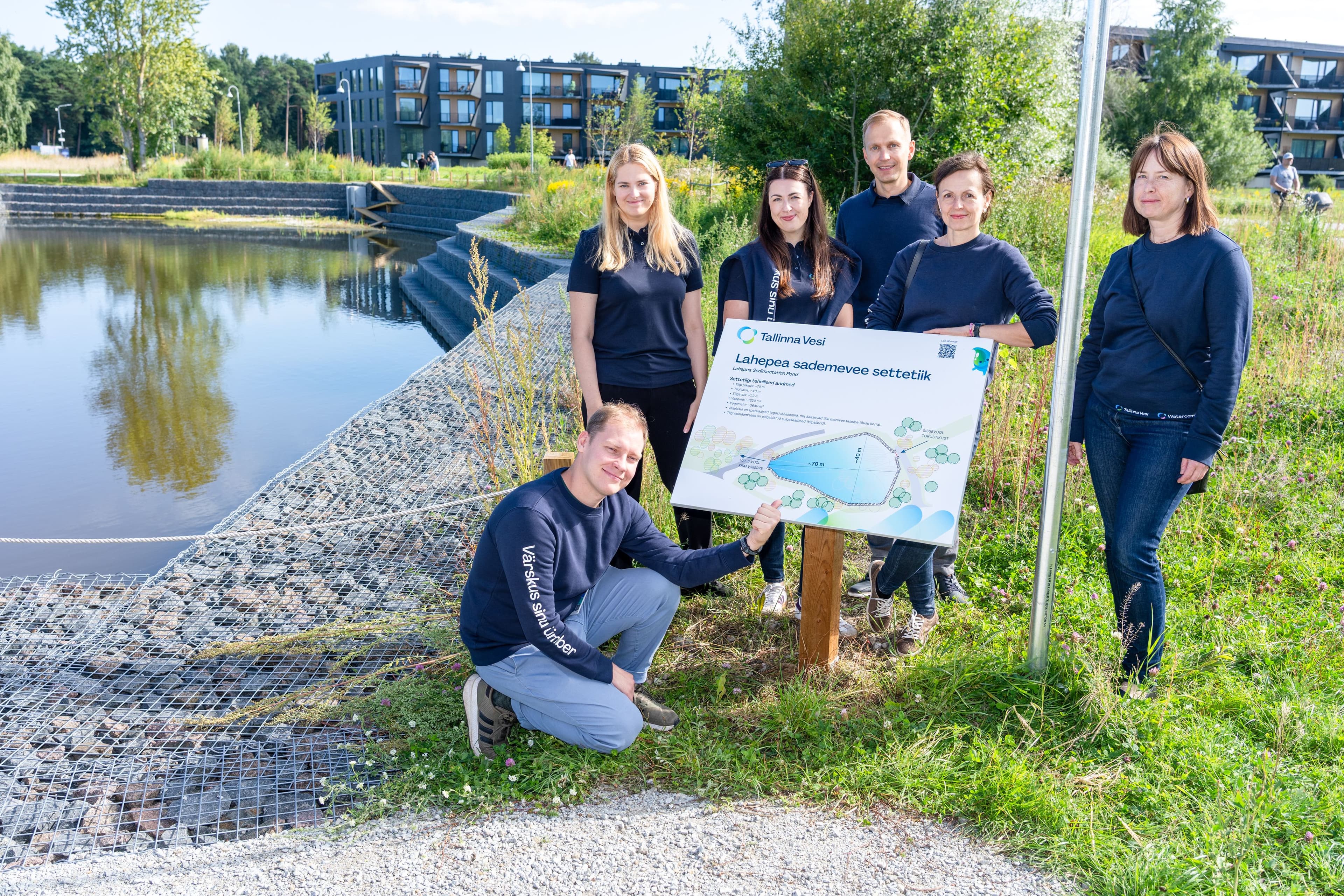
The sedimentation pond built in the Lahepea Street area is the first of its kind in Tallinn. The pond was built in a naturally low-lying area by the sea, just before the ditch that flows into the sea. Gabions filled with granite stones were used to form the banks of the pond, ensuring they would last a long time and blend in with the natural environment. The potential rise in sea level was taken into account when choosing the height of the pond's banks, and special valves have been installed to protect the pond and the area's stormwater system in the event of such a rise.
Grit, sand and sediment from the streets are first caught in the street gullies, that have been built with a special gully pot for trapping the sediments. The sedimentation pond, which is located before the water flows into the sea, provides an additional measure for settling any remaining sand and grit. The pond slows down the flow of water and also has a flow-equalising effect. The flow of stormwater from the pond is continuously monitored, and maintenance of the pond is carried out based on this information.
The reconstruction project began in 2024 with the rehabilitation of the pipes between Pollinator Highway (Putukaväil) and Ehte Street on Kolde Avenue. Last year, 1.5 kilometres of stormwater pipes were also replaced in Merimetsa Park and the Stroomi green area, between Kolde Avenue and Lahepea Street. This year, the same pipe is being extended along Kolde Avenue and Sõle Street. Work is also underway on the Hipodroomi junction on Paldiski Road, where stormwater will now be directed into the sea.
The Kolde stormwater collector is of strategic importance to North Tallinn, as it is used to drain stormwater from Kolde Avenue, as well as Pollinator Highway and Sõle, Ehte, Paavli, Ristiku and Härjapea streets. The previous stormwater collector, which was built in 1934, was no longer fit for purpose due to its condition and capacity. Also, the pipes were connected to the wastewater system.
The existing nature was preserved as much as possible when constructing the sedimentation pond and the stormwater system. Additionally, almost 300 trees and shrubs were planted during the project. The project was partially funded by the Environmental Investment Centre through the European Union Cohesion Fund measure, which covered up to 55% of the costs. The work was carried out by VH Ehitusteenused OÜ.
AS Tallinna Vesi is the largest water utility in Estonia, providing services to around 25,000 private customers and businesses and about 500,000 end consumers.
Photographer: Andres Teiss