


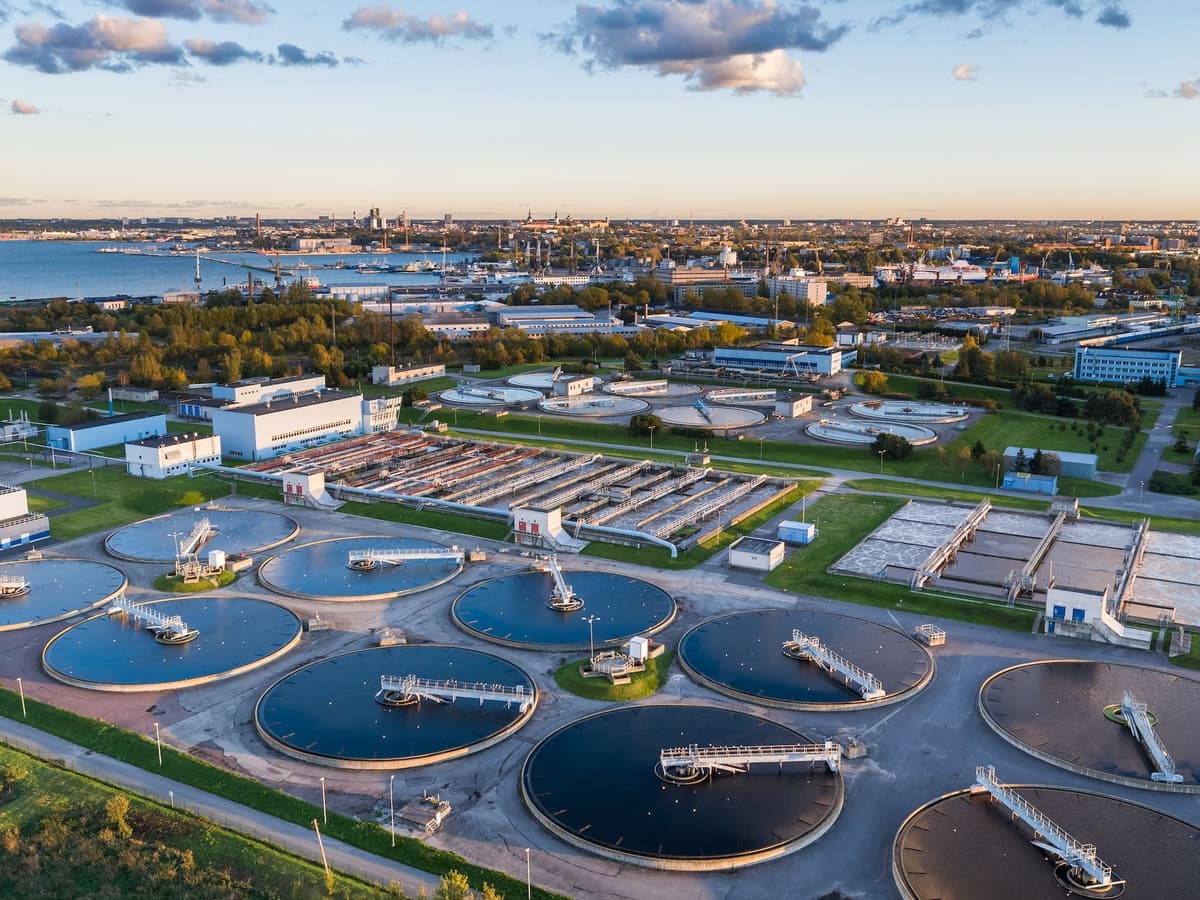
Wastewater sampling and excess pollution fee
Why do we sample our customers’ wastewater?
Sampling the wastewater is necessary to ensure that it can be recycled in a way that is safe for the environment. We take samples of our customers' wastewater to make sure the sewer system and wastewater treatment can work efficiently.
Excessive pollution puts load on the wastewater treatment process and causes more blockages. It also increases the risk of environmental non-compliance and causes health problems.
The water cycle is crucial when it comes to environmental impact. We make sure that the quality of the effluent complies with applicable standards or, better still, outperforms them.
Who do we take wastewater samples from and how?
There are few steps preceding wastewater sampling, in which we also involve the customer.
Sampling points are determined based on a risk assessment, taking into account our customers' activities, the pollutants they potentially produce, and the volume of their wastewater. This allows us to identify places where wastewater quality may need particular attention.
We monitor the level of pollution in wastewater discharged into the public sewerage system. This is done at the connection point agreed with the customer, the inspection chamber specified in the service contract, or the nearest suitable sampling point.
A sampling point must be installed on the sewer pipe at the point of consumption. This could be a sewer manhole at the connection point or a sampling chamber, as specified in the separate connection conditions. All chambers and manholes must comply with applicable requirements.
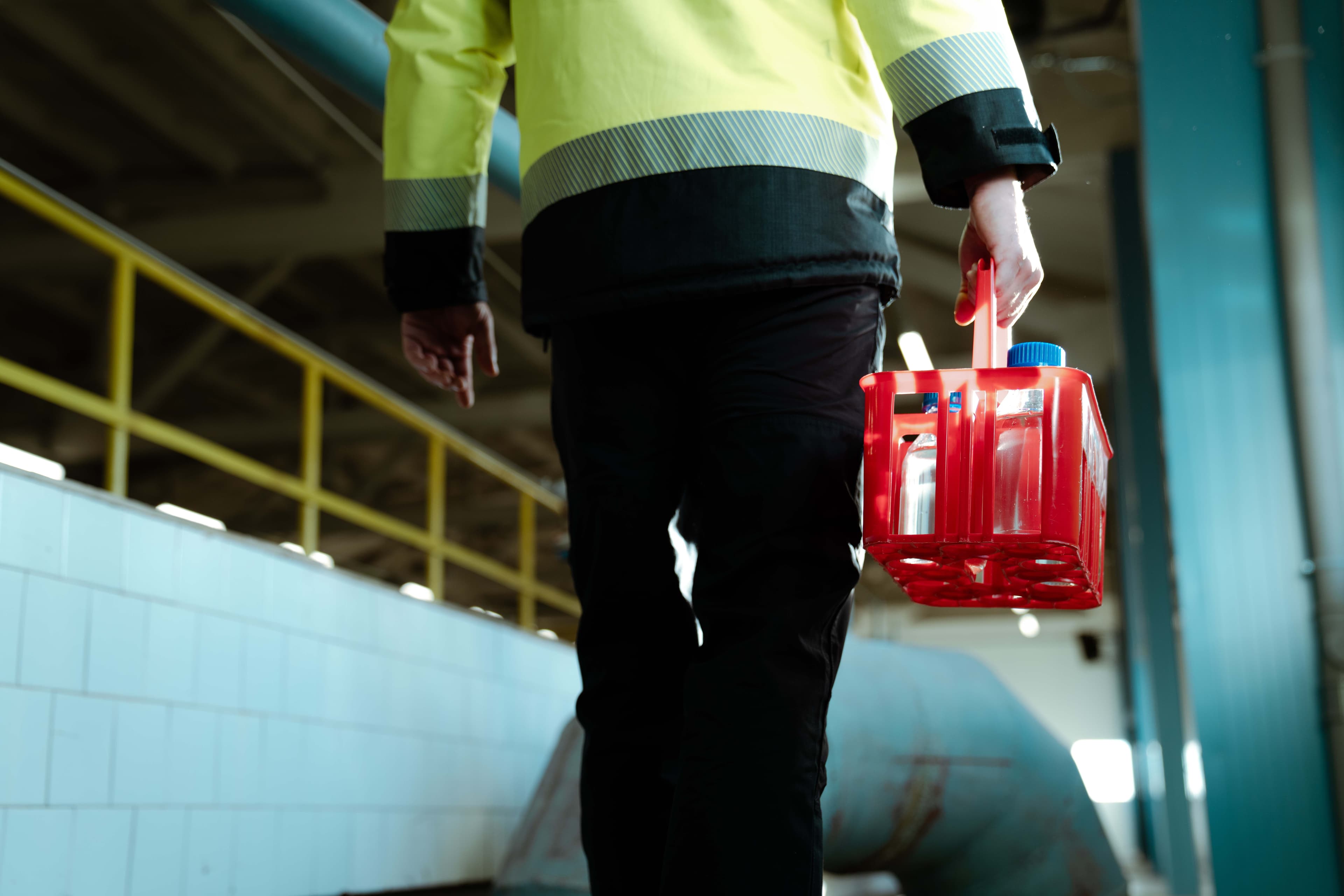
Prior to sampling, our inspector will contact the customer by phone to arrange a time for sampling. We always give you the option of being present during sampling.
The presence of a customer representative is not mandatory, however, it's recommended. We can also take samples without the customer's representative being present, if agreed with the customer in advance.
Sampling is carried out in accordance with the applicable regulation.
Public Water Supply and Sewerage Act
What happens if the wastewater exceeds the limit values?
The customer is responsible and may be charged a fee for pollution exceeding the values (hereinafter ‘excess pollution fee’) if the concentration of pollutants in the wastewater exceeds the permitted limits.
This fee will help to compensate for the harmful effects of wastewater that exceeds the required standards, and will ensure that the treatment process and the public wastewater system function properly.
Any sewer problems on the customer's territory will be rectified at the customer's request and expense. If necessary, the customer can consult a specialist company to help solve problems related to sewers.
How do we calculate excess pollution fee?
Based on tested wastewater samples
Charging period
The excess pollution fee will be charged from the date of sampling until the next sampling, for a maximum period of six months.
Application of excess pollution fee
If the initial sample indicates excess pollution, we will let the customer rectify the situation before charging the excess pollution fee.
However, the fee may already be charged following the results of subsequent tests. The customer must monitor the composition of their wastewater and, if necessary, take measures to ensure that the wastewater complies with the rules approved by Tallinn City Council.
The excess pollution fee is calculated based on the amount of water used during the billing period and the prices for wastewater service in place.
What causes wastewater pollution and how to avoid it?
Wastewater pollution can be avoided and mitigated through constant awareness, for example, by choosing eco-friendly cleaning products and using oil and grease traps where necessary.
Find out more about what causes wastewater pollution.
Acidity/alkalinity (pH)
Water that is too acidic or alkaline damages sewer pipes and disrupts biological treatment.
For this reason, industrial chemicals and highly acidic or alkaline substances must be kept out of sewers and, if necessary, neutralisation agents and systems must be used.
Suspended solids
The presence of organic and inorganic solids (especially when combined with fat) often causes blockages, increases the need for pump maintenance and puts more load on the mechanical treatment stage at the wastewater treatment plant.
Therefore, care must be taken to avoid excessive amounts of solid waste, such as food waste, soil, sand, plastic, etc., entering the sewers.
Where necessary, on-site pre-treatment systems, such as septic tanks or filtration and separation systems, must be in place and properly maintained.
Biochemical oxygen demand (BOD)
A high BOD level means there is a lot of organic matter in the water that needs to be broken down. Excessive discharges of food waste, fats, and other organic substances into sewers must therefore be avoided.
Chemical oxygen demand (COD)
COD measures the total amount of organic matter that must be oxidised, including the fraction that cannot be broken down by biological processes. Minimising the amount of chemicals, solvents and organic compounds reaching sewers is therefore important.
Oil products
Oil products mainly come from industry and the streets, often from cars or other vehicles. They cause significant environmental pollution and disrupt the wastewater treatment process. It is therefore important to use oil traps that are designed for specific flow rates, ensure that vehicles are well-maintained and leak-proof, and avoid oils or chemicals reaching sewers or the streets (gullies).
In the event of a major spill, immediately notify the Rescue Board. They will contain the spill and help clean up any pollution if this is necessary. We also ask that you notify us of this.
Fats (cooking oils, resins, waxes, etc.)
Fats cause sewer blockages, disrupt biological treatment processes and increase the cost of wastewater treatment. To avoid this, use grease traps and don't pour oil down the drain. Large quantities of waste fats must be taken to collection points accepting hazardous waste.
Grease traps used in catering establishments require regular maintenance and cleaning. It is important to refill the grease trap with clean water immediately after emptying it. The grease trap must be of sufficient size, because the more grease or the smaller the trap, the more often it needs to be cleaned. In some cases, special bacteria can be used to reduce the amount of grease, but it should also be borne in mind that these bacteria require suitable growth conditions and time. They are also not resistant to hot water or disinfectants.
Phosphorus (Ptotal) and nitrogen (Ntotal)
These mainly come from detergents, food waste and organic fertilisers, and indicate excessive organic pollution. Therefore, use detergents that don’t contain nitrogen and phosphorus, and avoid food waste ending up in sewers.

